

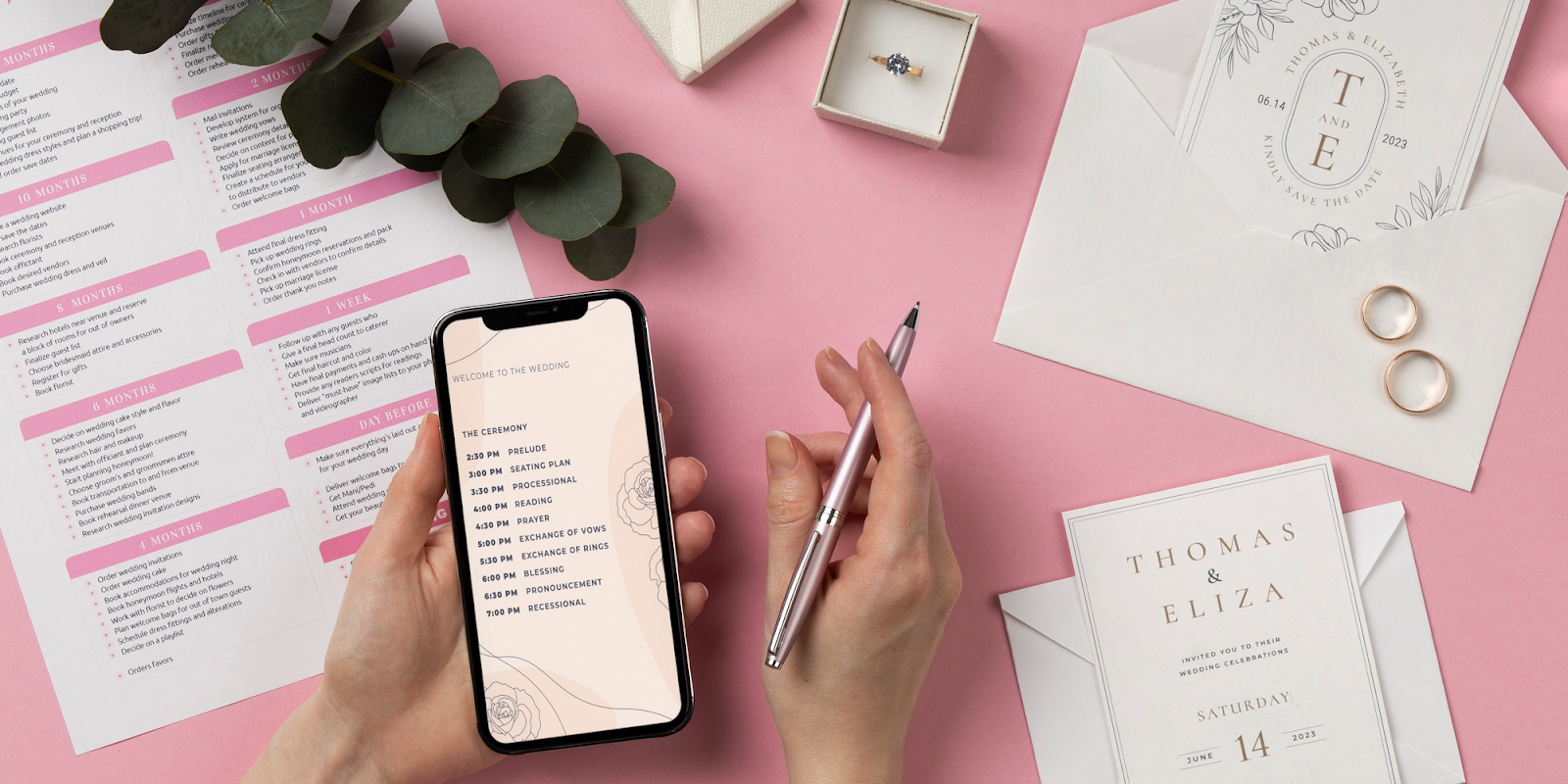
With the evolution of technology, the traditional way of sending wedding invitations and managing RSVPs has undergone a remarkable shift. The advent of digital invitations is not only an eco-friendly option but has also introduced an efficient way of tracking responses, aiding in the preparation of the special day.
Though the charm of printed invites remains, many couples are now opting for digital invites, primarily for their convenience and effectiveness in RSVP management. Gone are the days when you had to wait for postal services to deliver the RSVPs, or make those awkward calls to inquire if the invitation was received. Advancements in technology have not only simplified these processes but also minimized potential human error.
Digital invitations come with a comprehensive suite of benefits. They offer in-built features for directly recording the responses of guests, providing an automatic count of attendees. This system significantly reduces the time and effort spent on manual counting and record-keeping. Moreover, it eliminates the uncertainty regarding ‘lost’ invitations, or RSVPs, which can cause unnecessary stress during wedding planning.
Keeping up with this trend, many online platforms such as Paperless Post, Minted, and Greenvelope, have appeared on the scene, offering customizable digital invitations. The ease of editing the number of guests, plus-one allowances, diet preferences and adding personalized messages is a testament to the flexibility of digital invites.
According to a study by The Knot and Mashable, about 76% of couples created their wedding website in 2019, up from 48% in 2015. This rise indicates a willingness to shift towards digital platforms for handling their wedding responsibilities, with digital invitations as part of this trend.
Lisa Goodwin, a wedding planner in Seattle, agrees. “More couples are incorporating technology in their wedding planning,” she says. “This not only includes using wedding apps and social media but also sending digital invitations. They appreciate the efficiency it offers in managing RSVPs, and their guests appreciate the convenience.”
Digital invites also offer cost-effectiveness, with the option to send invites to hundreds of guests at little or no cost. “It’s a harder pill to swallow when you think about the price for print invitations and postage, design fees, or the cost of a calligrapher. It adds up quickly,” says Christina Reed, an event planner in Chicago.
Considering the current state of the world, digital invitations prove to be a safer choice amidst the pandemic. The shift has been significant in 2020, due to the necessity of limiting physical contact. Janine Martel, a graphics designer from Roseville, noted a marked uptick in requests for digital invites since early 2020.
However, digital invitations still have a long way to go in terms of being universally accepted. Some guests—particularly those from older generations—may prefer traditional paper and ink invitations and be uncomfortable with digital technology.
Keeping this in mind, couples might want to consider a hybrid approach: sending printed invites to older guests and digitally to the younger crowd. As digital invitations grow in popularity, companies now offer services where they create both digital and printed versions of the same design.
The realm of wedding invitations and RSVP management has undeniably been disrupted by the digital revolution, creating more choices than ever for betrothed couples. In an age where ‘smart’ is in front of every gadget we use, weddings have clearly joined in the triumph of technology. However, with the charm and tradition associated with printed invites, it will be interesting to see how these two mediums continue to coexist.Original Source: https://wantthatwedding.co.uk/2026/01/31/rsvp-for-a-wedding-managing-responses-with-digital-invitations/
In the bustling world of social media, many businesses have latched onto Pinterest as their primary platform for growth. With the rise in popularity of Pinterest-specific courses, service-based business owners are joining the trend with high hopes to maximize their online presence. Recent coverage, however, underlines a disconcerting fact: these Pinterest courses may not be delivering the expected benefits for service-oriented businesses.
The central issue lies in the presumption that Pinterest is a universal tool, delivering profitable results for all enterprises. While Pinterest thrives as a powerful visual social media platform, its functionality appears more favorable for product-based businesses, compelling viewers to ‘pin’ items they might wish to buy later. However, when it comes to service-based businesses, the translation isn’t as straightforward.
Statistically, Pinterest counts on more than 440 million active users who generate over 200 billion pins, according to Omnicore Agency data. Of these pins, about 72% lead to a product or service they wish to buy later. The issue arises when trying to quantify how many of these saved pins morph into actual sales. Ultimately, this uncertainty sets service-based businesses into murky waters with Pinterest marketing.
Moreover, Pinterest’s target demographics don’t align well with most service-based businesses. A significant portion of Pinterest’s users are females aged 25-34, whereas the broad spectrum of service-oriented businesses, from legal firms to plumbing services, often targets a more diverse demographic.
Rebecca Healy, a digital marketing specialist, paints a succinct picture. “Service-based businesses often offer intangible products whose benefits are not easily propounded through images alone,” she explains. “Unlike a beautifully crafted handbag or a mouth-watering dish, you can’t ‘pin’ a tax consultation, a legal service, or a housecleaning package compellingly.”
Healy stresses that service-based businesses need to consider alternatives more attuned to their business nature. For example, platforms such as LinkedIn and Twitter, whose algorithms rely more on textual content, networking, and personal engagement, might prove more advantageous.
Pinterest’s underperformance for service-based businesses doesn’t negate the platform’s potential. However, enrolling in a Pinterest course may not necessarily promise the revenue increase that a service-based business hopes to see.
Critics of Pinterest courses argue that many courses oversimplify the process, leading business owners to believe that followers directly equate to customers. While it’s true that a larger pool of followers can increase a post’s outreach, followers do not always translate to buying customers. This muddles the overall efficiency of Pinterest for service-based businesses and questions the substance of these courses.
Moreover, the algorithm of Pinterest is elusive and often kept private. The limited understanding of the dynamics behind the Pinterest search engine makes many strategies proposed by Pinterest courses to feel redundant or outdated. This secrecy potentially further compromises the effectiveness of such courses for service business owners.
Despite these evident obstacles, some service-oriented business owners still recognize value from Pinterest and its courses as a part of their broader business strategy. They utilize Pinterest as a cataloging tool, where they pin ideas and trends pertinent to their services.
For others, instead of direct customer acquisition, they see Pinterest more as a tool for traffic redirection. They aim to lure Pinterest users to their website or blog, where a more comprehensive depiction of their services can manifest. A carefully constructed strategy will help in this approach, but whether this method can generate substantial revenue is yet to be verified with concrete evidence.
The bottom line, however, is this: The depiction of Pinterest as the millennial goldmine for humongous business growth may not hold true for service-based businesses. Businesses cannot turn a blind eye towards the limitations of the platform and the potential ineffectiveness of Pinterest courses. Objectivity and fresh, strategically curated approaches are required in redefining digital marketing strategies. It is a necessity that businesses not fall victim to surface-level glamour and instead opt for strategies that genuinely cater to their unique business needs.Original Source: https://jenvazquez.com/why-pinterest-courses-dont-work/?utm_source=rss&utm_medium=rss&utm_campaign=why-pinterest-courses-dont-work